Retired and unsure how to fill the week? The best things to do in retirement combine a sense of purpose, a regular social habit and an activity sized to your energy, started small and adjusted as you learn what suits you.
The ideas below are grouped by purpose, budget and energy, with quick-start steps at the end. For the wider mindset behind them, see how to live intentionally.
Common misunderstandings about retirement activities
Most disappointment in the first months comes from a few assumptions: that an empty calendar must be filled quickly, that purpose needs a big commitment, and that health limits shrink the options to almost nothing. Each assumption has a more workable alternative, and the table sets them side by side.
| Common assumption | What works better | Planning use |
|---|---|---|
| A good retirement means a packed schedule. | Build a daily routine around a few fixed anchors before adding more. | Pick the anchors first, such as a morning habit and a weekly meeting, then layer new activities on top. |
| Purpose requires a full career. | Work part time at a place you already enjoy, or consult for two days a month. | Choose a paid role only if the income or structure matters to you; otherwise treat it as optional. |
| Volunteering means signing up for a fixed, heavy schedule. | Ease into volunteering to avoid burnout and to keep it fitting your routine. | Start with a small role and increase it only once it feels sustainable. |
| Health or mobility limits rule out most options. | Flexible or virtual roles can accommodate mobility or chronic conditions; for medical, balance, heat or fall risks, ask a clinician what fits before testing an activity. | Match the activity to your body first, then to your interests. |
These points draw on Lifehack’s retirement ideas and AllSeniors’ guide to senior volunteer programs.
The fixed-anchor idea matters most. A structure that you can rely on gives every later choice, from a class to a trip, a place to land. If you want a daily and weekly structure for looking after yourself, a self care routine is a practical place to anchor it.
Finding purpose after work
Purpose after work usually comes from being useful to someone on a schedule you control. Paid work, consulting and volunteering are the three most direct routes, and they suit different people.
Part-time work and consulting
Part-time work suits people who miss the structure, the colleagues or the income. The simplest route is to work part time at a place you already enjoy, where you know the people and the pace. Consulting is a lighter variation: Lifehack’s example is consulting for two days a month, which keeps your professional skills in use without rebuilding a full week around them.
Choose this route if you want your expertise valued and a reason to leave the house on set days. Look elsewhere if what you miss is mainly company or variety, because a job can recreate the demands you retired from.
Volunteering
Volunteering suits people who want meaning without income. Start with a role you can step back from. AllSeniors advises easing in so that volunteering avoids burnout and fits your routine. If mobility or a chronic condition is a concern, flexible or virtual roles are an option, and a healthcare provider or social worker can recommend safe and suitable programs based on your health status.
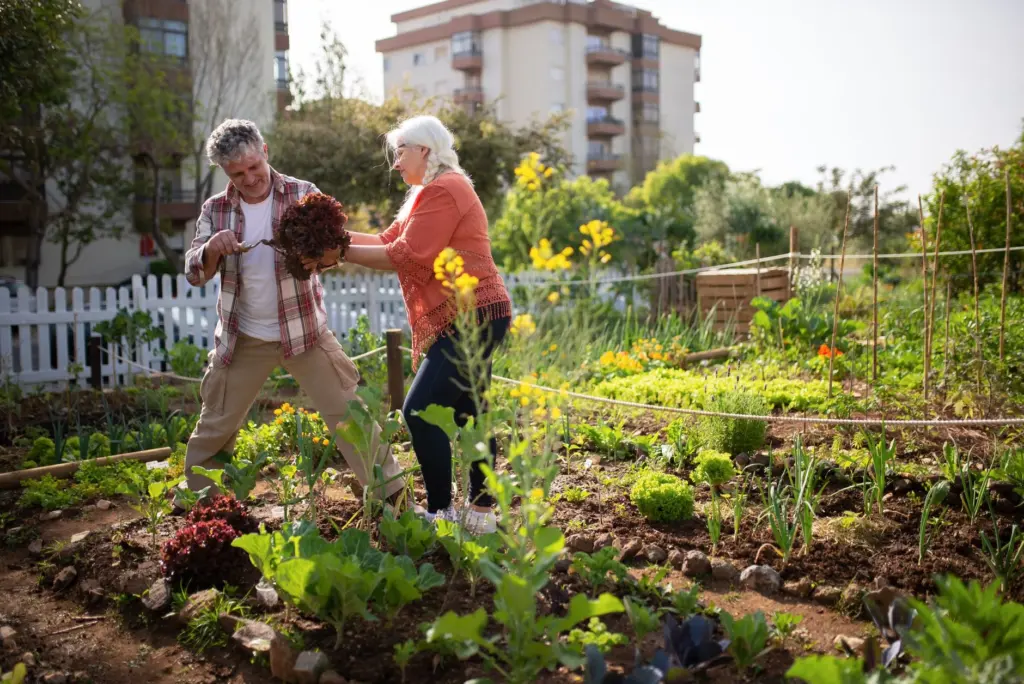
Hands-on outdoor roles, such as helping in a shared garden, give a task with a visible result. They can be a good first trial because the effort is easy to scale up or down.
Ideas by budget and energy
Cost and effort rarely move together. Some of the cheapest options are also the gentlest, and some of the most energetic cost nothing. Sort ideas by what you can spare today rather than by what sounds impressive.
- Low cost, low effort: Reading stays affordable with free library memberships and ebook subscriptions. It is a sensible default for days with little energy.
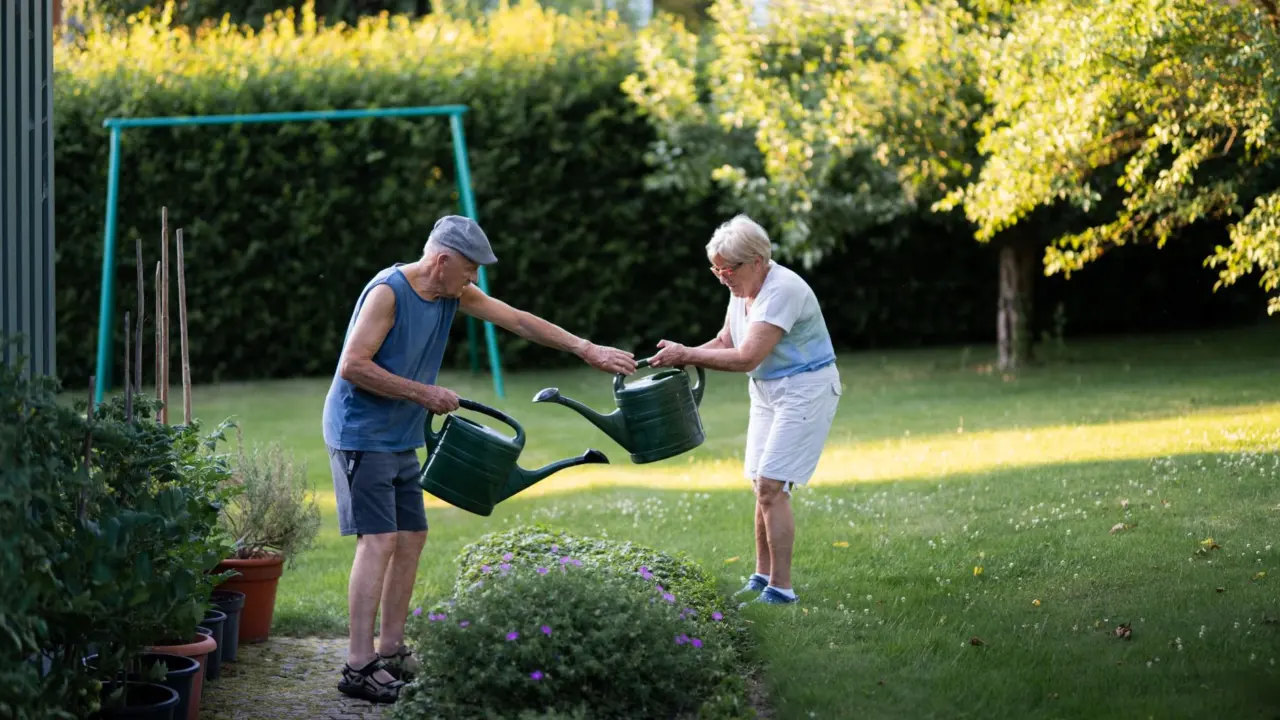
- Low cost, adjustable effort: Gardening can take as much or as little time and effort as you want, depending on how many plants you grow and which types. Begin with a few and add more only if you enjoy the upkeep.
- Low cost, social: Time spent with other people in social settings is described as inexpensive and readily available, which makes company one of the best-value choices on a tight budget.
- Moderate planning: Taking one college course without pursuing a degree gives a structured outlet for curiosity. Confirm the fee and time commitment with the institution before you enrol.
- Higher planning: Short travel experiments, covered below, need the most organisation but can be kept small.
If your energy is unpredictable, keep one option from the first two bullets available every week. That way a low day still has something purposeful in it.
Staying social
Social contact holds up best when it recurs. A fixed slot removes the effort of arranging each meeting, so starting a standing Tuesday coffee is a small step with a lasting effect. Invite one or two people, keep the day and place the same, and let attendance vary.
Hobbies can do the same job. Askchapter notes that many hobbies either are or could easily be social, with book clubs and dancing as examples. If you are choosing between two hobbies, prefer the one that puts you in a room with the same people regularly.
Slow travel and day trips
Travel does not have to mean a long itinerary. Slow travel keeps trips small and repeatable, which suits retirees who want novelty without heavy planning or cost.
Two low-commitment trials come from Lifehack’s list: exchange homes with a trusted friend for a weekend, and take a transit-only day trip. The first tests the idea of staying somewhere else without a long booking. The second shows how much effort a day out takes when you leave the car at home. If both feel comfortable, a longer stay becomes a more informed choice.

If you are shopping for a retired friend or relative rather than planning your own outings, Gift Experience Ideas That Wow: 25 Creative Experiences For Every Recipient (2026) – Dontstopliving collects experience-based ideas that can double as retirement activities.
Learning and hobbies
Lifelong learning works best when it has a start and an end. A single course gives a schedule, a teacher and classmates, and it does not tie you to a degree. Treat it as a trial of a subject, not a commitment to a qualification.
Hobbies serve a different purpose: they fill the unstructured hours. Choose one that matches your current energy, and keep a second in reserve for lower-energy days. Reading and gardening, mentioned above, cover both ends of that range.
Quick-start steps
Work through these in order. Each takes little effort and gives you information for the next.
- Set your anchors. Decide on a few fixed points in the week before adding anything else.
- Check your health limits. If you have medical, balance, heat or fall risks, ask a clinician what fits before testing a new physical activity.
- Try one purposeful role. Pick part-time work, a consulting day or a small volunteering role and see how it feels before expanding it.
- Add one recurring social slot. A standing coffee or a club meeting is enough.
- Add one experiment. Choose a course, a weekend swap or a transit day trip, and review what you liked afterwards.
After a few weeks, keep whatever you looked forward to and drop the rest without guilt.
Frequently asked questions
| Question | Answer |
|---|---|
| What age do senior volunteer programs serve? | They are designed for adults aged 60 and older, with a focus on meaningful community service. |
| Can fostering an animal give me purpose without a long-term commitment? | Yes. Fostering is a short-term care role, and connecting with animals can lower stress, lift your spirits and ease loneliness. |
| Is pickleball a good low-impact option? | It is described as easy to learn and low impact. Anyone with balance or fall risks should still check with a clinician first. |
| Where can I start researching family history without spending money? | The National Archives provides free resources to help you get started with genealogy and history. |