First time skydiving excites and scares many people. The reader learns what to expect before the first jump. This guide covers motivation, medical basics, options, packing, the jump sequence, safety, and what comes next. The information helps the reader prepare and feel confident for the first time skydiving experience.
Key Takeaways
- First time skydiving offers a thrilling experience but requires a clear mindset and medical clearance to ensure safety.
- Choosing between tandem jumps and solo training depends on your time, budget, and desire for control, with tandem being ideal for beginners.
- Prepare practically by booking at licensed drop zones, dressing appropriately, and staying hydrated before your jump.
- On jump day, follow the safety briefing, trust your instructor, and stay relaxed throughout the aircraft ride and exit.
- Understand the jump sequence—from exit to landing—and follow instructor guidance to minimize injury risks.
- After your first time skydiving, rest properly, consider professional photos, and explore further training or clubs if you want to continue.
Is Skydiving Right For You? Motivation, Mindset, And Medical Basics
People try first time skydiving for many reasons. Some seek an adrenaline hit. Some test fear limits. Some mark a life event. They should check health first. Doctors advise people with recent heart problems, uncontrolled high blood pressure, or acute infections to avoid the jump. People with epilepsy or certain psychiatric conditions should get clearance. The reader should also review medication effects on alertness. A clear mindset helps. They should accept brief discomfort and follow instructor directions. If the person feels extreme panic, they should delay and consult a professional.
How To Choose The Right Skydiving Option: Tandem Vs. Solo Training
Most beginners choose tandem jumps for their first time skydiving. Tandem pairs the student with a certified instructor. The instructor controls the exit, freefall, and landing. Tandem limits required training to a short briefing. Solo progression requires an AFF or static-line program. AFF gives accelerated freefall training with instructors holding on during initial jumps. Solo training gives faster control skills but demands more time and commitment. The reader should consider time, budget, and risk tolerance. If they want the simplest route to a safe jump, tandem often fits best.
Practical Pre-Jump Preparation: Booking, Weather, Packing, And What To Wear
The reader should book with a licensed drop zone that uses a national or regional governing body. They should confirm instructor credentials and equipment maintenance records. Weather can change plans. Wind, low clouds, or storms can delay or cancel jumps. Drop zones usually contact customers the morning of the flight. Pack simple items: ID, confirmation, and signed waiver. Avoid heavy jewelry or loose items. Wear layered clothing and close-toed shoes with a firm sole. The harness fits over clothes. Sunglasses are fine, but choose secure frames. Eat a light meal and stay hydrated before first time skydiving.
Jump Day Step‑By‑Step: Arrival, Safety Briefing, Gear, And The Aircraft Ride
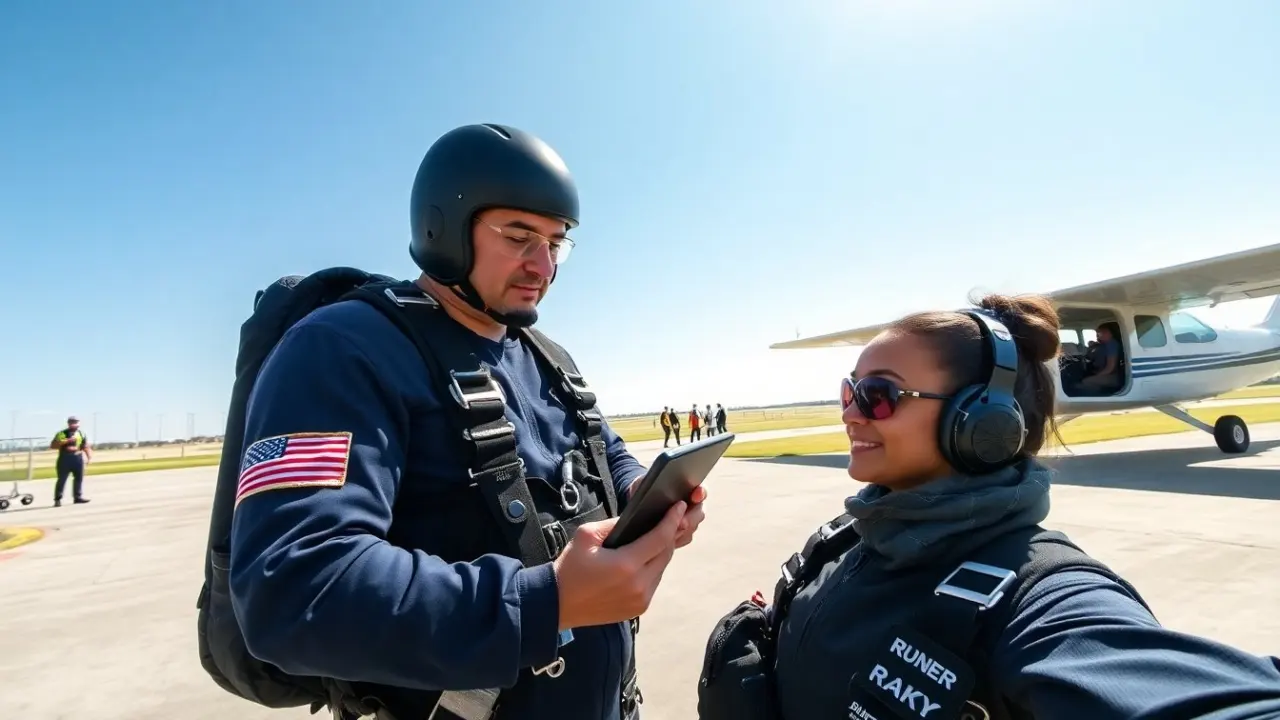
They should arrive early to complete paperwork and attend the safety briefing. The staff fits the harness and explains signals. The briefing covers body position, breathing, and emergency cues. For tandem, the instructor fits a secondary harness and attaches a reserve. For AFF, the student practices exits and hand signals on the ground. The aircraft ride offers time to review. People should relax and follow the instructor’s checklist. The pilot confirms weather and wind. The staff loads gear and secures occupants. They climb to altitude while staff performs final checks before the exit.
The Jump Itself: Exit, Freefall, Canopy Flight, And Landing Tips
The instructor opens the door and signals the exit. For tandem, the instructor controls the exit and holds the student securely. The pair exits together and enters freefall. Instructors count or use a timer to track the freefall phase. Freefall lasts roughly 30 to 60 seconds from typical sport altitudes. The instructor deploys the main parachute at the planned altitude. During canopy flight, the pair steers toward the landing area. The instructor gives landing signals and may flare the canopy to slow descent. For solo students, instructors monitor and coach on radio or via ground signals. To reduce injury risk, people bend knees and rise on the balls of their feet on final contact with the ground.
Safety Standards, Common Risks, And How Instructors Minimize Them
Drop zones follow safety standards set by national organizations and local regulators. Instructors complete certification and regular currency checks. Equipment gets inspected on a schedule and before each jump. Common risks include hard landings, canopy malfunctions, and collision during exit. Instructors minimize risks through training, conservative decision rules, and redundant systems like reserve parachutes and automatic activation devices. Weather limits reduce exposure to wind shear and turbulence. Proper packing and maintenance reduce malfunction probability. Students should ask about incident records and emergency procedures before signing waivers.
After Your First Jump: Managing The Aftermath, Photos, And Next Steps
After first time skydiving, people often feel intense excitement and fatigue. They should rest, hydrate, and eat. Many people want photos or video. Drop zones offer photo packages or allow camera flyers when safe. The reader should ask about digital or physical delivery options. If they liked the experience, they can enroll in an AFF program or book more tandem jumps to build confidence. They can also join local skydiving clubs to learn packing and maintenance. If they feel unsure, they should discuss feelings with the instructor or a medical professional before continuing.