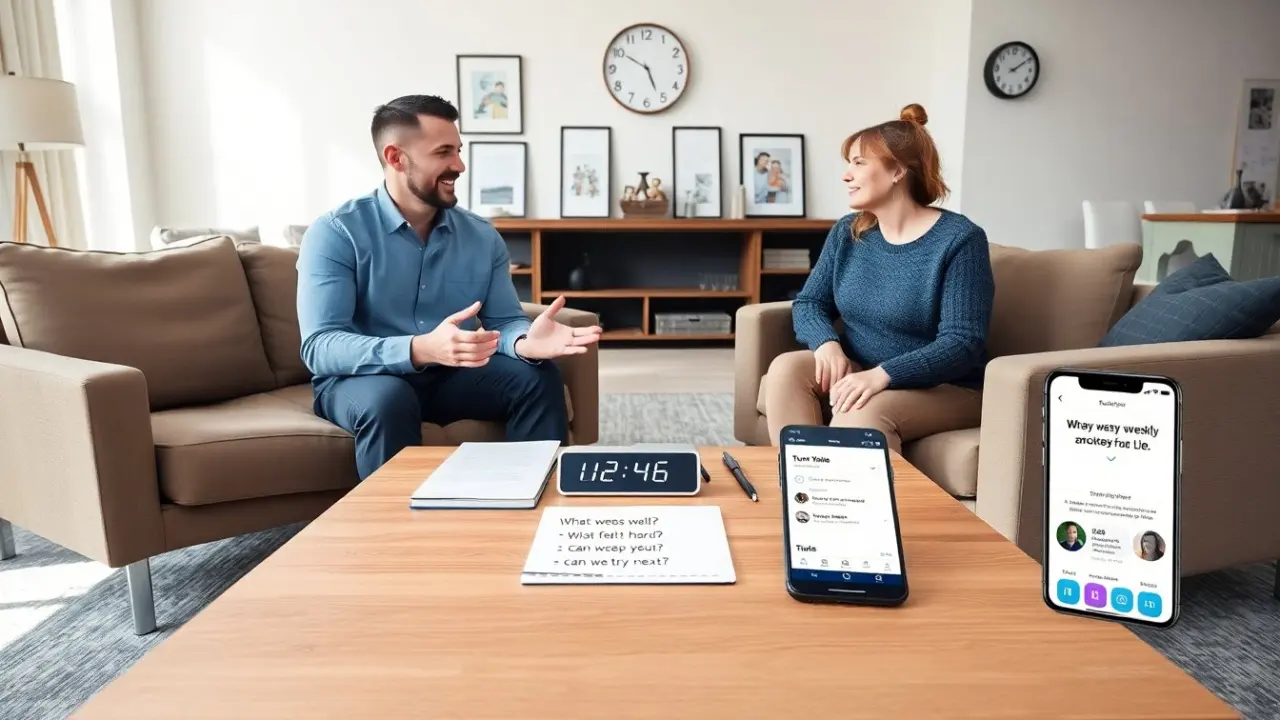
How to communicate better with your spouse matters for daily peace and long-term trust. This guide gives seven clear strategies a couple can use. Each sentence states a simple step. The reader will see practical skills and a short routine they can try this week. Use these ideas to move from reactive exchanges to steady, respectful conversations that resolve issues and deepen connection.
Key Takeaways
- Improving communication with your spouse fosters daily peace and long-term trust by reducing stress and recurring conflicts.
- Avoid common communication barriers like interrupting, mind reading, blaming, and emotional flooding to maintain open dialogue.
- Practice core conversation skills such as active listening and clear speech to enhance understanding and connection.
- Establish a weekly 20-minute check-in routine where each partner shares and listens actively to build communication habits.
- Use tools like a conversation log and a three-question template to track progress and sustain improvements.
- Better communication strengthens important areas like parenting, finances, and intimacy, leading to higher relationship satisfaction.
Why Improving Communication Transforms Your Relationship
Clear communication changes how partners solve problems. It reduces recurring fights and lowers stress in the home. When a person speaks clearly, the partner understands needs and acts accordingly. When a partner listens, they stop assumptions and build trust. Small changes in speech create bigger changes in daily life. Better speech helps with parenting, money, and intimacy. Couples report more satisfaction when they share facts, feelings, and plans in simple ways. This section explains the main benefits and why effort pays off.
Specific benefits to expect when you learn how to communicate better with your spouse:
- Faster resolution of disagreements — less rehashing the same argument because concerns were named and addressed.
- Lower emotional charge — when partners can express needs without blame, conversations stay calmer.
- Stronger cooperation on daily tasks — clear requests reduce friction over chores, schedules, and parenting duties.
- Improved emotional intimacy — sharing feelings vulnerably and responding with empathy builds closeness over time.
Think of communication as a tool you can refine: practice improves precision (clear requests), tone (so the message lands), and timing (choosing moments when both partners are present). The return on that effort shows up in everyday interactions — fewer surprises, fewer resentments, and more predictable teamwork.
Common Communication Barriers Couples Face And How To Spot Them
Many barriers block clear talk. One common barrier is interrupting. A partner who interrupts prevents the other from finishing a thought. Another barrier is mind reading. A person may assume motives without asking. A third barrier is blaming language. Blame shuts down dialogue and raises defenses. Emotional flooding also stops useful exchange. A partner may feel overwhelmed and leave the conversation. To spot these barriers, watch for repeated fights about the same topic, sudden silence, or reactive tones. Noticing these patterns helps a couple take the next step toward change.
Concrete signs that a barrier is active right now:
- Interrupting: you or your partner often finish each other’s sentences or jump in with solutions before the other has completed their thought.
- Mind reading: statements beginning with “You always…” or “You just want…” that assign intent rather than asking a question.
- Blaming: phrases that use “you” to assign fault instead of describing an effect, e.g., “You never…” rather than “I feel frustrated when…”
- Emotional flooding: one partner shuts down, walks away, or starts crying because the volume or speed of the interaction became too high.
How to spot the pattern across time: keep a simple note for two weeks listing the topic, who started the exchange, and what happened (e.g., interruption, blame, withdrawal). Patterns become visible quickly and give you one or two clear targets to change — for example, reducing interruptions or substituting “I” statements for blame.
Core Conversation Skills Every Couple Should Practice
Couples should practice three core skills. Each skill reduces misunderstanding and raises connection. The next three subheadings break down these skills with clear actions.
Active listening
- What it is: fully focusing on your partner, reflecting back what you hear, and asking clarifying questions rather than planning your reply.
- How to practice: use a short script — “So what I’m hearing is… Is that right?” — and aim to repeat their main point before you respond.
- Mini exercise: for two minutes, one partner talks about a neutral topic while the other reflects back; then swap.
Clear speaking (owning your message)
- What it is: saying specific needs and observations instead of vague complaints or characterizations.
- How to practice: use “I” statements and include a concrete request. Example: “I felt hurt when the dishes were left. Could you please rinse them by bedtime?”
- Tip: keep requests simple and time-bound so they are easy to act on and evaluate.
Regulating emotion and timing
- What it is: recognizing when emotions are too high to be productive and pausing safely.
- How to practice: agree on a signal or phrase that means “pause and return,” plus a commitment to reconvene within a set time (e.g., 30–60 minutes).
- Tool: use a short breathing or grounding technique (three deep breaths, name three objects in the room) before continuing a tough conversation.
Pairing these skills creates conversations that are both honest and safe. Start small: pick one skill to work on for a week and note how interactions shift.
Practical Routines And Tools To Practice Weekly
A couple should pick a simple weekly routine to strengthen skills. They can schedule a 20-minute check-in on a set day. During the check-in, each partner uses active listening for five minutes while the other shares. They then swap roles. They also review one small request from the week and state one appreciation. A couple can keep a short log of topics and outcomes. This log helps track progress and repeatable wins. Tools that help include a three-question template: What went well? What felt hard? What can we try next? A couple can use a timer and a written agenda to keep the session short and fair. If a couple struggles with pacing, they can add a third-party app that guides turn-taking and notes. Weekly practice converts new skills into habits and reduces drift.
Detailed 20-minute check-in structure (pick a quiet time and turn phones off):
- 2 minutes — set intention (agree what you want to get from the check-in).
- 5 minutes — Partner A shares; Partner B listens and reflects (no problem-solving).
- 5 minutes — Partner B shares; Partner A listens and reflects.
- 5 minutes — Two-minute exchange: each states one request or plan for the coming week and one appreciation.
- 3 minutes — Summarize next steps and schedule any follow-up if needed.
Simple tools to support the routine:
- Conversation log: one line per meeting with date, topic, and outcome (e.g., decision, follow-up item).
- Three-question template: What went well? What felt hard? What can we try next?
- Timer or alarm to keep turns fair and prevent the check-in from running long.
Troubleshooting common issues: if one partner resists the routine, start with a five-minute version and celebrate any attempt. If emotions run high during the check-in, use the agreed pause signal and reconvene after a short break. If progress stalls, narrow your focus to one small behavior (e.g., fewer interruptions) and measure that for two weeks.
Final practical tip: commit to two micro-habits that reinforce communication daily. Examples: each night name one appreciation before bed; each morning ask “What’s one non-negotiable for you today?” Small, consistent moves compound into clearer, kinder communication over months. Learning how to communicate better with your spouse is an ongoing process — these routines and skills give you a roadmap to turn intention into steady, measurable change.